
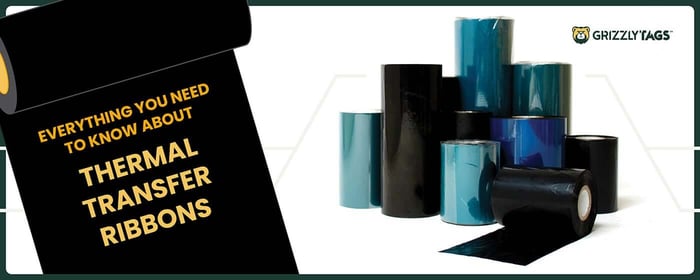
Thermal Transfer Ribbons: A Complete Guide
Table of Contents
In demanding industrial environments, things are always in motion. Amidst the chaos of day-to-day operations, let's be honest—no one is thinking about your printer's thermal transfer ribbons. They're not flashy. They don't get budget meetings. No one's bragging about them on LinkedIn.
But the second they stop performing properly? Now they're the most important thing in your operation.
At GrizzlyTags, we work with businesses every day that rely on durable, high-performance labeling. To help them avoid costly downtime caused by unreadable print and failed barcode scans, we pair the right ribbon with the right material. Because choosing the correct ribbon is not just a technical decision—it is a strategic one.
How Thermal Transfer Printing Works
Thermal printers are a popular choice for businesses that want to create high-quality, durable labels while saving valuable time and money by printing on demand. These printers use heat from the printhead to transfer ink from a ribbon onto a label surface. This creates a crisp image that adheres to the tag or label material.
Unlike direct thermal printing, which relies on heat-sensitive paper that tends to fade over time, thermal transfer printing is designed for longevity. It's the preferred method for applications where durability, readability, and resistance to environmental conditions matter. However, achieving that performance depends on selecting the right ribbon.
Ribbon Types: Wax vs. Resin
The ink on thermal transfer ribbons is engineered for a specific level of durability and performance. Understanding how they are different is key to selecting the right ribbon for the job.
Wax Ribbons
Wax thermal transfer ribbons are the most widely used option in thermal transfer printing. They are designed to be used with paper labels and provide excellent print quality for standard barcodes and text.
Wax ribbons work best for:
- Shipping labels
- Inventory tags
- Retail labeling
- General warehouse use
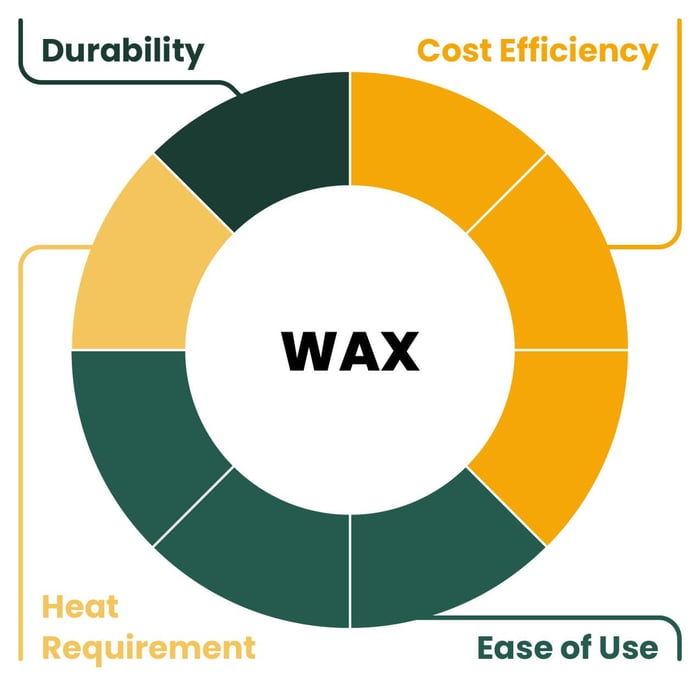
Wax ribbons are the go-to for a reason. They're affordable, easy to use, and produce clean, readable prints in high-volume indoor environments. They also require lower printhead heat, which can help extend the life of your equipment over time. But here's the tradeoff: wax wasn't built for abuse. The print will smudge, scratch, or fade when exposed to friction or heat. If your labels are living a rough life, you will need a more durable ribbon.
Resin Ribbons
Resin thermal transfer ribbons are engineered for maximum durability. When paired with synthetic labels, they create prints that remain intact under the harshest conditions.
Resin ribbons work best for:
- Harsh industrial environments
- Outdoor applications
- Chemical exposure
- Long-term asset labeling
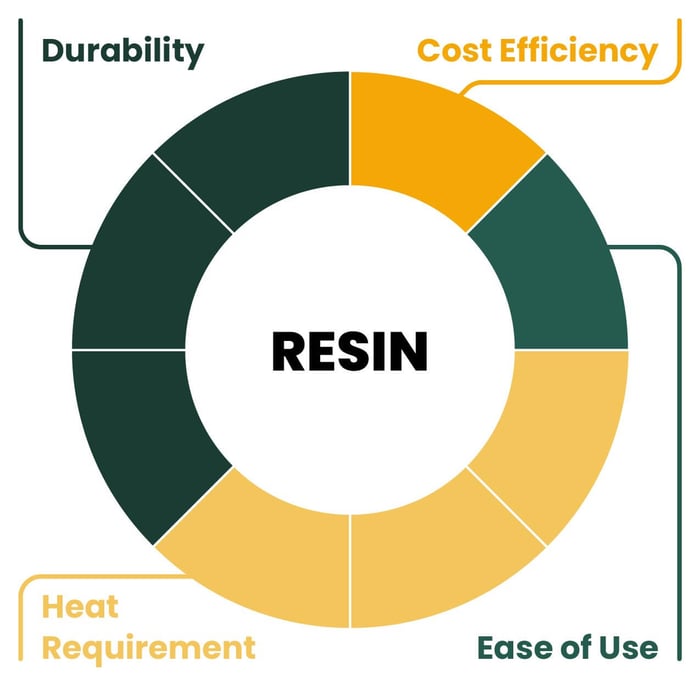
Resin ribbons provide superior resistance to chemicals, abrasions, UV exposure, and extreme temperatures. This makes them essential for high-volume demanding industries such as manufacturing, automotive, and healthcare. The downside: they are more expensive than wax ribbons, and they typically require a higher heat setting to print properly, which can add extra wear on the printer. But the result is a durable print that can withstand the most challenging environments.
Resin-Enhanced Wax Ribbons
Also called wax/resin thermal transfer ribbons, resin-enhanced wax ribbons blend the best of both worlds. They are a cost-effective ribbon that provides a durable print, while also being more forgiving across a range of printer settings.
Resin-enhanced wax ribbons work best for:
- Both paper and synthetic label materials
- Both indoor and outdoor environments
- Across a wide variety of industries
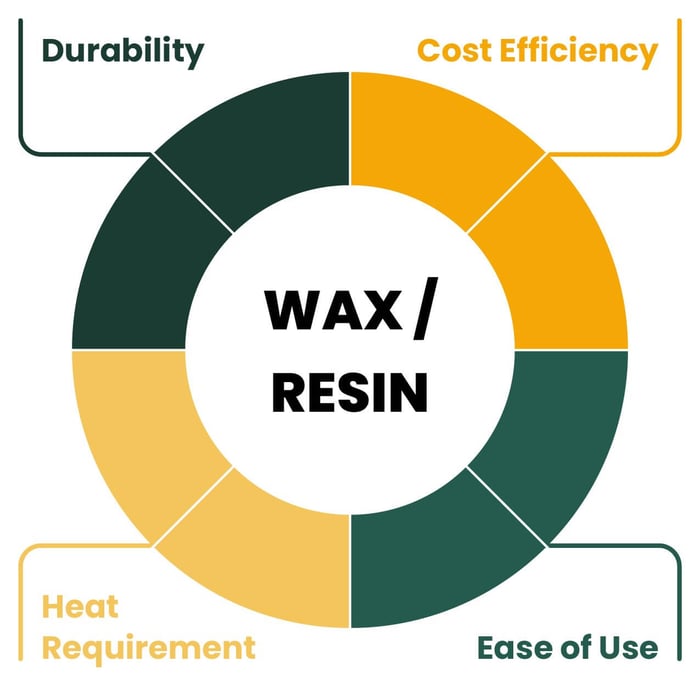
Due to their flexibility, this is the type of ribbon we recommend for most customers.
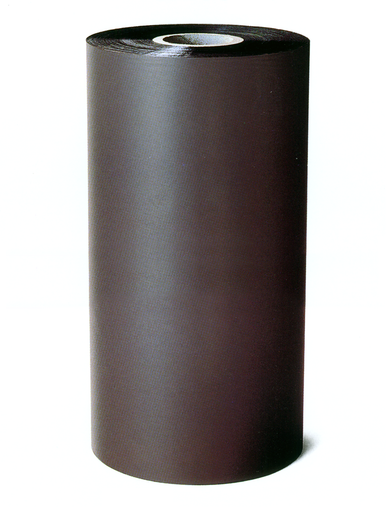
Thermal Transfer Ribbons: Resin-Enhanced Wax, 4.17 in x 1476 ft (106mm x 450M), Black, 1 Case (24 Ribbons), CSO, For Zebra & TSC Printers
$217.60
Thermal Transfer Ribbons: Resin-Enhanced Wax, 4.17 in x 1476 ft (106mm x 450M), Black, 1 Case (24 Ribbons), For Zebra Printers Priced per case....… read more
Regardless of which ribbon type you choose, selecting the right one for your application is critical. Lower-quality ribbons may save money upfront, but they often lead to poor print quality and costly rework. That's why we partner with premium ribbon brands like Black Rhino—so you can print with confidence.
Ribbon Orientation: CSI vs. CSO
There is more to thermal transfer ribbons than just the composition of the ink. Ever load a new ribbon into your printer only to have it suddenly stop printing on your material? Both the computer and printer show that the job was printed, but you're left holding a blank label. Why? Chances are, the ribbon was loaded backwards. The key question becomes: What side is the ink on?

Ribbon ink is coated onto a clear polyester film and rolled onto a core. The ribbon can be rolled in one of two ways:
- Coated Side In (CSI) - the ink faces inward on the roll
- Coated Side Out (CSO) - the ink faces outward on the roll
For a thermal transfer printer to print properly, the ink side must face your label during printing.
Not sure what ribbon you have? You can use scotch tape to test which side the ink is on! If ink sticks to the tape, that's your coated side.
Ensuring Printer Compatibility
It's often these small details that can create the biggest issues in labeling environments. Not every ribbon will work with every printer, and some models can only use one type of ribbon orientation. To avoid annoying headaches caused by unnecessary downtime, it doesn't hurt to double-check what type of consumables your printer needs.
Desktop printers often need labels and ribbons on smaller cores due to their compact size. While industrial thermal printers can take larger rolls to keep production moving without interruption.
When selecting a ribbon, keep the following in mind:
- Printer type (desktop vs. industrial)
- Core size (typically 0.5" or 1")
- Ribbon size (width and length)
- Coated side orientation (CSI vs. CSO)
- Durability requirements (wax vs. resin vs. resin-enhanced wax)
Not sure which ribbon and media you should use? Give us a ROAR! We can advise you on the best materials for your labeling job!
Why It Pays to Choose the Right Partner
Thermal transfer ribbons shouldn't be complicated, but they also can't be an afterthought. The right ribbon choice improves efficiency, reduces waste, and ensures consistent performance.
At GrizzlyTags, we will get you up and running faster. We don't just sell ribbons—we support the full solution. We will help you select the right ribbon to pair with your label material and printer, all while solving performance issues before they become costly problems.
Ready to learn more about the GrizzlyTags difference? Connect with our team of experts. Because in high-performance operations, even the smallest components can have the greatest impact.
Related Articles
The ROI of Durable Tags & Labels: Why Investing in Quality Pays Off
In industrial operations, there’s no shortage of big-ticket items competing for...

How to Place an Order with GrizzlyTags
At GrizzlyTags, we know that getting the right tags, labels, and ribbons is...
Tags vs. Labels: Choosing the Right Product Identification Solution
Tags do not have any adhesive and are secured to products through strings, ties, clips, or staples....